Best Outdoor Kitchen Islands for Small UK Gardens 2025
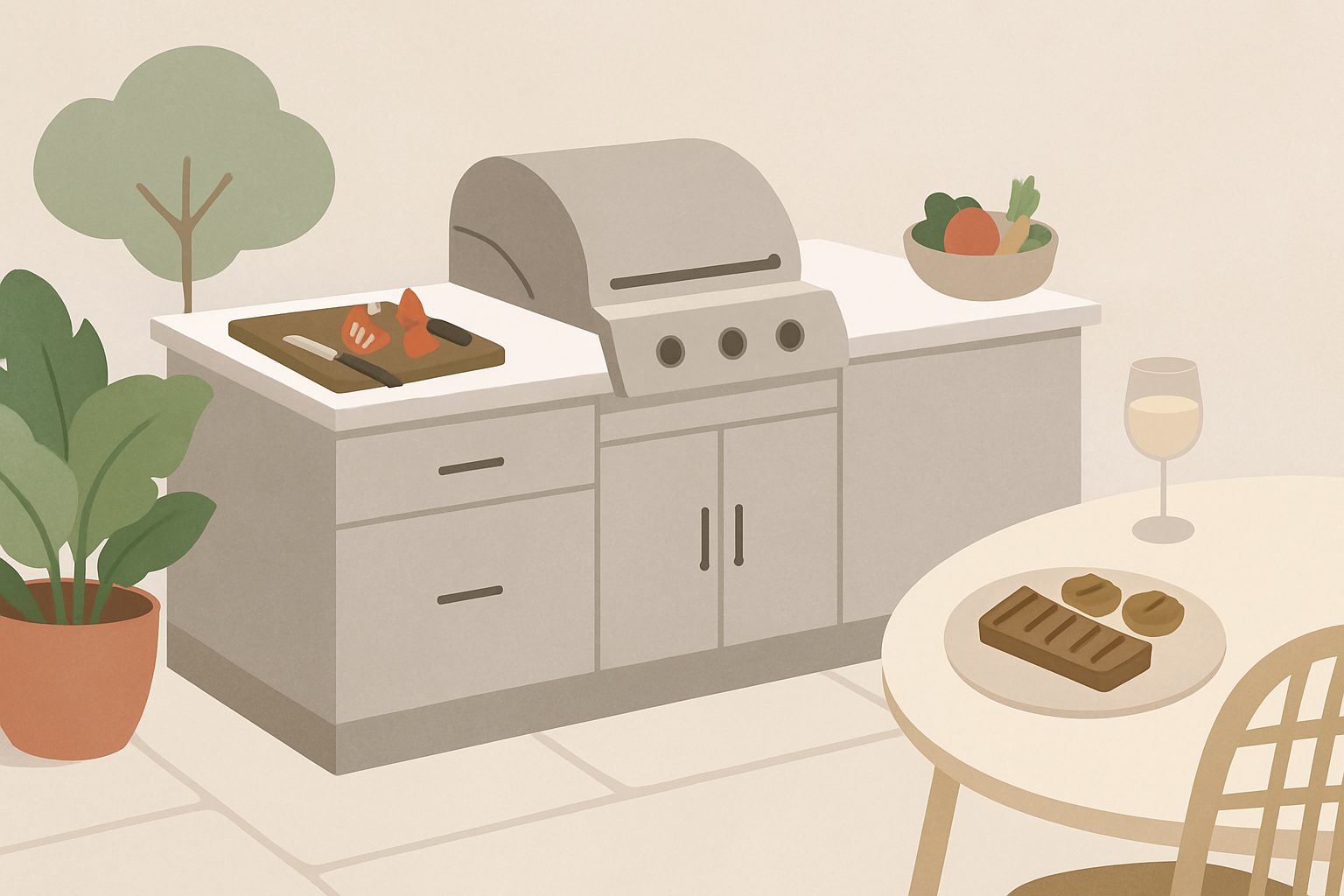
If you've got a modest garden but dream of outdoor entertaining, a compact kitchen island can transform how you use the space without eating up precious square metres. The trick is choosing a unit that's genuinely proportioned for smaller plots rather than cramming a full-sized commercial setup into a corner.
Why a Small Outdoor Kitchen Island Works
A dedicated island beats scattered prep surfaces. It creates a natural gathering point, keeps cooking separate from seating, and gives you focused counter space without sprawling across multiple built-ins. For gardens under 50 square metres, that containment matters—you're not losing the garden to infrastructure.
Most small-garden islands sit between 100–150 cm wide. That's narrow enough to maintain flow and clear sightlines, but substantial enough for a gas hob, sink, and decent prep space. You're looking at units that handle weekend entertaining without dominating the landscape.
Modular Kits vs. Fixed Builds
Modular systems (typically 50–90 cm modules you can combine) offer genuine flexibility. If you move house or redesign the garden, you're not stuck with a massive fixed structure. They're also easier to install yourself—no needing a team of builders. The downside is slightly higher per-unit cost and, occasionally, less robust joinery where modules meet.
Fixed installations (welded steel or solid masonry) feel more integrated and robust, but they're a bigger financial commitment and much harder to adapt later. For renters or anyone uncertain about long-term plans, modularity wins.
Materials That Work in UK Weather
Stainless steel resists rust and needs minimal maintenance, but it's expensive and shows fingerprints relentlessly if you obsess over those things. That said, outdoor dirt hides that problem quickly.
Powder-coated steel costs less, looks sharp, and handles weather well if the coating's decent. Check that it's outdoor-grade, not just standard powder coat. You'll still want to rinse salt spray off in coastal areas.
Teak or hardwood looks gorgeous and ages gracefully, but needs annual oiling or sanding if you want to keep the honey colour. Many people prefer the silvered look it develops naturally, which requires no maintenance at all. Hardwood is also genuinely heavy—useful for stability in windy gardens.
Composite materials (recycled plastic and wood) don't rot, resist staining, and need almost no maintenance. They're increasingly common in compact units and solve the "I can't be bothered with annual sanding" problem.
Essential Features for Compact Islands
Integrated storage is crucial in a small space. Drawers and cupboards below the counter maximise usefulness—you need somewhere to stash utensils, cloths, and condiments without cluttering the prep surface. Look for weatherproof hinges that won't seize up.
A proper work surface should be slate, granite, or engineered composite. Stainless steel is fine but gets hot in sun. Avoid anything that stains easily unless you genuinely enjoy cleaning. Sealed wood can work if you're willing to maintain it.
Plumbing needs realistic assessment. A sink with hot and cold is lovely but requires mains water and waste runs. Cold-water-only or portable waste tanks reduce complexity. Some people live happily without plumbed sinks, using a camp-style basin instead.
Gas supply can come from a mains line (needs a surveyor and Gas Safe installer) or a bottle underneath. Bottles are easy to change, but you'll swap them every 8–12 weeks depending on use. They also take up base space.
Space-Saving Layouts
In genuinely tight gardens, consider an L-shaped island pushed against a fence or hedge. It uses the perimeter efficiently and doesn't feel as cramped as a standalone unit. You lose some visual openness, but you gain working length.
A single-row island—essentially a narrow counter with a hob at one end and prep space at the other—suits long, thin gardens. It won't serve multiple cooks comfortably, but it's honest about its scale.
Islands with fold-down surfaces or pop-up burners exist in the market, but they tend to be either gimmicky or seriously expensive. A simple fixed setup with well-planned dimensions usually wins for reliability and value.
Durability and Maintenance Reality
UV exposure fades painted finishes and can warp timber if it's not properly sealed. In reality, gardens get dirty—bird droppings, pollen, dust. Budget for occasional cleaning (pressure washer on low, mostly). Deep cleaning twice a year keeps things looking reasonable.
Rust appears quickly if any bare steel is exposed, so inspect welds and edges. Many mid-range units have adequate protection; budget options sometimes don't. It's worth reading reviews specifically about longevity in UK gardens rather than assuming all stainless-steel units are equal.
Budget Realities
A decent compact island costs between £800–£2,500, depending on materials and built-in equipment. The jump from bare-bones modular units (£600–£1,200) to ones with integrated grills and sinks (£2,000+) is significant. Don't assume expensive means better—focus on whether the specific unit suits your garden size and actual cooking habits.
Cheaper kits sometimes have thin stainless or poorly finished timber. It's not always a false economy to spend more if the welds look solid and the drawer glides are branded.
Final Word
The best island for a small garden is one you'll actually use—not a kitchen showpiece that sits unused because it's too ambitious for your space or workflow. Prioritise durability, honest sizing, and practical features over aspirational aesthetics. Measure twice, order once, and don't assume bigger is automatically better.
More options
- Modular Outdoor Kitchen Island Units (Amazon UK)
- Stainless Steel Outdoor Kitchen BBQ Island (Amazon UK)
- Outdoor Kitchen Island Weatherproof Cover (Amazon UK)
- Outdoor Rated Undercounter Fridge (Amazon UK)
- Outdoor Pizza Oven Insert for Kitchen Island (Amazon UK)