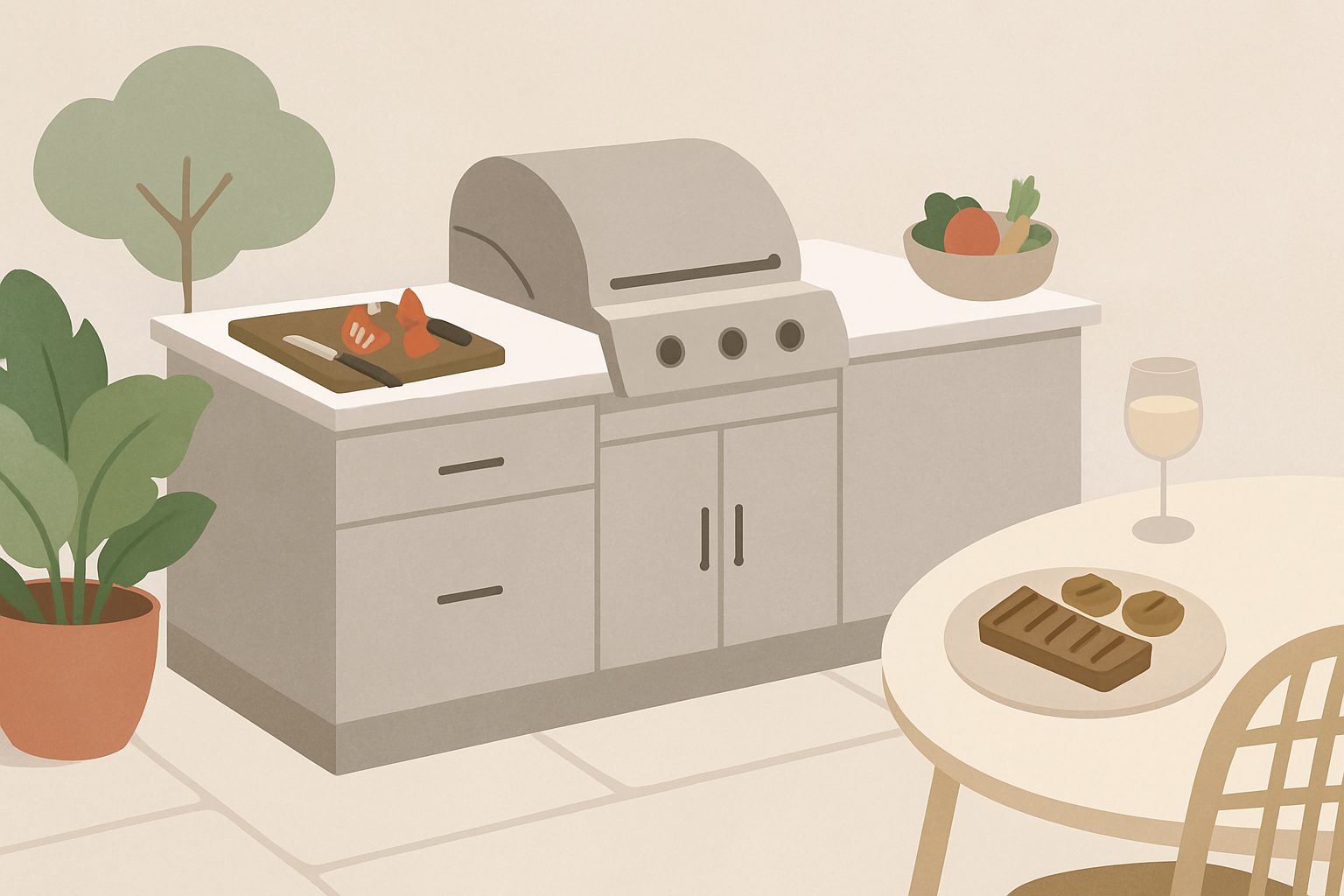
Best Weatherproof Outdoor Kitchen Islands for the UK Climate 2025
Britain's unpredictable weather — rain, frost, humidity, and salt air near coastal areas — demands outdoor kitchen equipment that actually holds up. Most garden kitchens fail within two or three seasons because builders skimp on weatherproofing. If you're installing an outdoor kitchen island, the difference between something that lasts ten years and one that rusts into scrap comes down to three specific factors: IP ratings, material selection, and protective covers.
IP Ratings: What They Actually Tell You
IP (Ingress Protection) ratings appear on spec sheets but often confuse buyers. The two digits matter differently. The first digit (0–6) rates solid particle protection; the second (0–8) rates water resistance. For outdoor kitchens, you're looking for IP54 minimum, ideally IP55.
IP54 means dust won't enter moving parts and water spray from any direction won't damage electrics. IP55 adds low-pressure water jets—think garden hose, not a fire hydrant. Most weather-resistant outdoor units top out at IP54 or IP55. Don't pay extra for IP67 or higher on a freestanding island; that rating is overkill for an appliance that isn't submerged and adds unnecessary cost.
Check the rating on anything with electronics: built-in burners, ignition systems, or LED lighting. Stainless steel bodies look weatherproof but can conduct moisture into wiring. IP ratings confirm that the internals are actually sealed.
Material: Stainless Steel Isn't Bulletproof
Marketing leans hard on "stainless steel" as if it's indestructible. The reality is more nuanced. Stainless steel resists rust better than mild steel, but the UK's damp, sometimes-salty air will corrode ordinary grades. Grade 304 stainless (the most common) handles general weather but struggles with chloride exposure near coasts. Grade 316 is genuinely better for seaside gardens; it costs 20–30% more but lasts significantly longer if you live within a few miles of the sea.
Beyond the cabinet, look at fasteners. Bolts and hinges corrode faster than the body. Quality islands use marine-grade stainless or A4 stainless bolts throughout; cheaper models use plated steel that fails within months. Run your hand over the underside and joints—cheap, rough welds trap water. Good construction shows smooth, tight welds with sealed edges.
Powder coating adds a protective layer over steel, but it's only as good as the surface preparation underneath. If the steel beneath isn't cleaned properly before coating, rust blooms from underneath within a season. Reputable makers use multi-stage surface prep; budget brands skip it.
Aluminium is lighter and doesn't rust, but it's softer than steel and dents more easily. It works well for doors and drawer fronts but carries higher cost. Some islands combine aluminium doors with steel frames—a reasonable middle ground.
All-Weather Covers: The Difference Between Years of Life
This is where most people fail. A £1,500 outdoor island left uncovered through winter will need refinishing or replacement by spring. Even quality stainless develops surface staining and water gets into joints. The cover is not optional.
A fitted cover—tailored to your island's shape—is worth the expense. Generic tarps flap in wind, collect water in pockets, and don't seal properly. Fitted covers cost £150–400 but protect the investment. Look for covers with reinforced eyelets, tie-down straps, and ventilation vents to prevent moisture buildup underneath.
Material matters. Canvas or heavy-duty canvas-polyester blends breathe better than solid vinyl, which traps condensation. Waterproof (not just water-resistant) fabric is essential. If the cover leaks, you're fighting moisture all winter.
Store removable items—utensils, small grates, thermometers—indoors. Stainless steel handles moisture better than iron grates do; cast iron should live inside the off-season.
Drainage and Gaps
Water finds every gap. Outdoor islands with poor drainage collect water in corners, under appliances, and between drawers and frames. Tilt the work surface slightly—even 1–2 degrees makes a difference. Check that cabinet bases have drainage holes or feet that lift the structure clear of ground-sitting puddles.
Look at how doors and drawers seal. There's no such thing as perfectly waterproof seals on outdoor furniture, but tight-fitting components with gaskets perform vastly better than loose, gappy construction. Open the demo unit and test the feel.
Stainless vs. the Climate: Real Expectation-Setting
Even Grade 316 stainless in the UK's damp climate will develop a dull patina and light surface staining over time. That's not rust (rust is orange and flaky); it's oxidation and mineral deposits from rainwater. It's cosmetic, not structural, and wipes off with a cloth or mild vinegar solution.
True rust—orange, rough pitting—signals a problem. It means corrosive material has penetrated the stainless or found unprotected fasteners. A well-made island with proper covers won't develop true rust within five years. If it does, the manufacturer cut corners on materials or finishes.
What to Check Before Buying
Before committing to an outdoor island, confirm: the stainless steel grade (ask the supplier, don't guess), the IP rating on any electrical components, the warranty (genuine outdoor units offer 3–5 years), and whether the manufacturer supplies or recommends a cover.
Buy from suppliers who stock spare parts—drawer fronts, seals, burner units. Budget brands disappear; in two years you won't find a replacement door or gasket. Established makers keep parts available for a decade or more.
The cheapest outdoor island rarely survives two UK winters. A mid-range unit (£1,500–2,500) with Grade 304 stainless, sealed construction, a cover, and realistic maintenance will outlast a low-cost impulse buy by years. Treat weatherproofing as the foundation of durability, not an optional extra.
More options
- Modular Outdoor Kitchen Island Units (Amazon UK)
- Stainless Steel Outdoor Kitchen BBQ Island (Amazon UK)
- Outdoor Kitchen Island Weatherproof Cover (Amazon UK)
- Outdoor Rated Undercounter Fridge (Amazon UK)
- Outdoor Pizza Oven Insert for Kitchen Island (Amazon UK)