Gas vs Charcoal Integrated Grills for Outdoor Kitchen Islands – UK Review
When planning an outdoor kitchen island in the UK, the grill choice often feels like the most important decision. Do you go with the convenience and temperature control of gas, or the flavour and authenticity of charcoal? Both work brilliantly in integrated installations, but they demand different spaces, skills, and budgets. Here's what you actually need to know before committing.
Gas Integrated Grills: Consistency and Control
Gas burner modules for outdoor kitchen islands are engineered for one thing: reliable, repeatable cooking. You turn on the ignition, wait three minutes, and you're cooking at 200°C or 400°C depending on what you need. No faffing about with kindling or nursing a grate for half an hour.
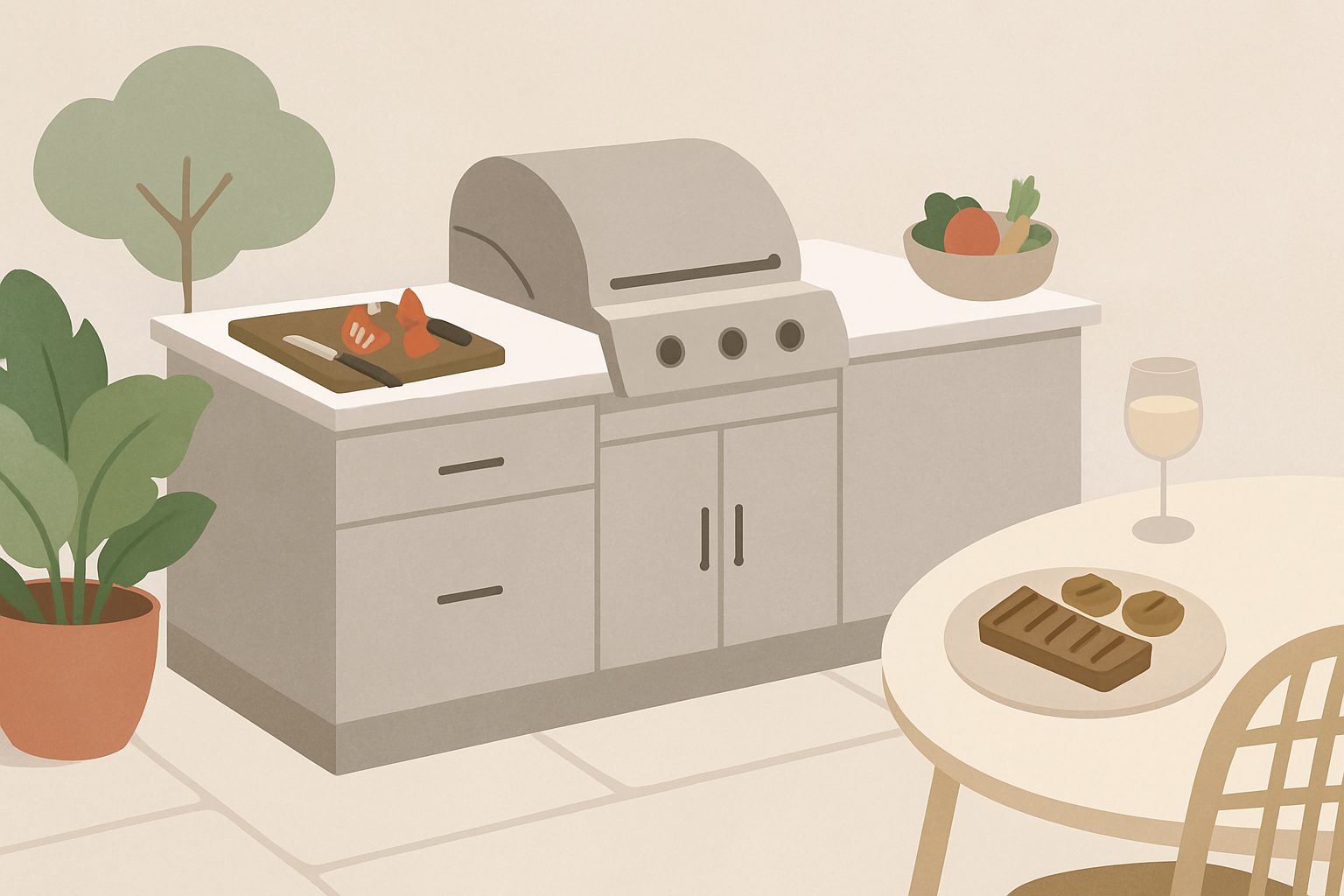
The integration advantage is real. Gas modules sit flush in a bespoke frame, giving your island a finished, professional appearance. Brands like Outback, Char-Broil, and Kokomo make robust stainless-steel inserts designed to handle UK moisture and coastal salt spray. Most run on bottled LPG (Propane or Butane), though natural gas connections are possible if you have mains supply nearby—rare for gardens, but worth checking.
The downsides? Gas is clinical. You won't get the same smoky char as charcoal, and purists will tell you the taste difference is noticeable. Real or not, it matters if you've got opinions. Ignition systems sometimes fail in damp conditions, and the thermostat control can feel overly fiddly if you just want to grill a steak without thinking about it. You're also reliant on fuel swaps or mains connection—neither seamless.
Fuel costs in the UK tend to be predictable (LPG around £0.50–0.70 per kg), so you can budget more easily than with charcoal, which fluctuates with wood prices and supply.
Charcoal Integrated Grills: Flavour and Ritual
Charcoal inserts bring theatre. The smell, the visible flames, the tangible control as you move coals around—it feels less like cooking and more like proper grilling. Kamado-style ceramic inserts (like those from Big Green Egg or Monolith) and offset firebox modules offer serious flexibility. You can sear at 400°C, then bank coals to one side for low-and-slow at 110°C.
Building a charcoal island around an offset firebox or kamado is structurally straightforward. These units are heavy but self-contained; you don't need gas supply or electrical hookups (unless you add a motorised rotisserie). They slot into brick or concrete frames without the plumbing fussiness gas demands.
The catch? Charcoal requires patience and attention. You need time to get coals going—20 to 30 minutes minimum—and skill to read temperature without a dial. It's rewarding if you enjoy the process, tedious if you don't. Ash management is ongoing; you'll need a sealed bin nearby. And consistency across sessions is harder. Two cooks using the same charcoal grill will get different results, which is fine if that's the point, but maddening if you're feeding guests.
Charcoal costs less upfront (a decent insert from £400–1,200), but fuel adds up. Premium hardwood charcoal in the UK runs £15–30 for a 10 kg bag, and a weekend of entertaining will burn through two or three bags.
Cost and Value Comparison
Gas modules for islands typically cost £800–2,500 installed, depending on build quality and whether you're running dedicated gas lines. Charcoal inserts are usually £400–1,500. So charcoal wins on entry cost, but the gap narrows once you factor in the island structure, surround, countertop, and weather protection.
Resale value? Most UK buyers are indifferent to grill fuel type, but a finished, well-integrated island—whether gas or charcoal—adds appeal. What matters is that the installation looks intentional and well-maintained, not patched together.
Installation and Space Needs
Gas grills need ventilation and a clear path for the supply line. Most building regulations don't require formal permission for backyard gas installations, but if you're running a mains connection, you'll need a Gas Safe registered fitter (legally required, costs £150–300). If you're using bottled LPG, you just need a secure bracket and a hose rated for external use.
Charcoal units are simpler. A concrete pad, brick surround, and stainless-steel grates are enough. Ventilation matters (especially for covered islands), but there's no compliance headache.
Maintenance and Durability
Both demand upkeep in the UK's damp climate. Stainless-steel gas burners can rust around seams if cleaning is neglected; charcoal grates and fireboxes need similar care. Neither lasts 20 years without attention, though a properly maintained unit will go 10–12 years.
Charcoal ceramic inserts (like Kamado) are fragile if dropped or subject to thermal shock. Gas burners are tougher but more complex to repair if ignition fails.
Which Should You Choose?
Pick gas if you want to grill casually, without ceremony. It's there, ready, reliable. You'll use it more often because there's no friction.
Pick charcoal if cooking is part of the entertainment—if you enjoy tending the fire, experimenting with temperature zones, and the respect that comes with a proper grill. You'll use it less frequently, but more deliberately.
For a permanent UK island, gas offers practicality and weatherability. Charcoal offers character and flavour. Neither is objectively better; it depends whether your garden time is a quick flip of sausages or an afternoon of ritual.
More options
- Modular Outdoor Kitchen Island Units (Amazon UK)
- Stainless Steel Outdoor Kitchen BBQ Island (Amazon UK)
- Outdoor Kitchen Island Weatherproof Cover (Amazon UK)
- Outdoor Rated Undercounter Fridge (Amazon UK)
- Outdoor Pizza Oven Insert for Kitchen Island (Amazon UK)