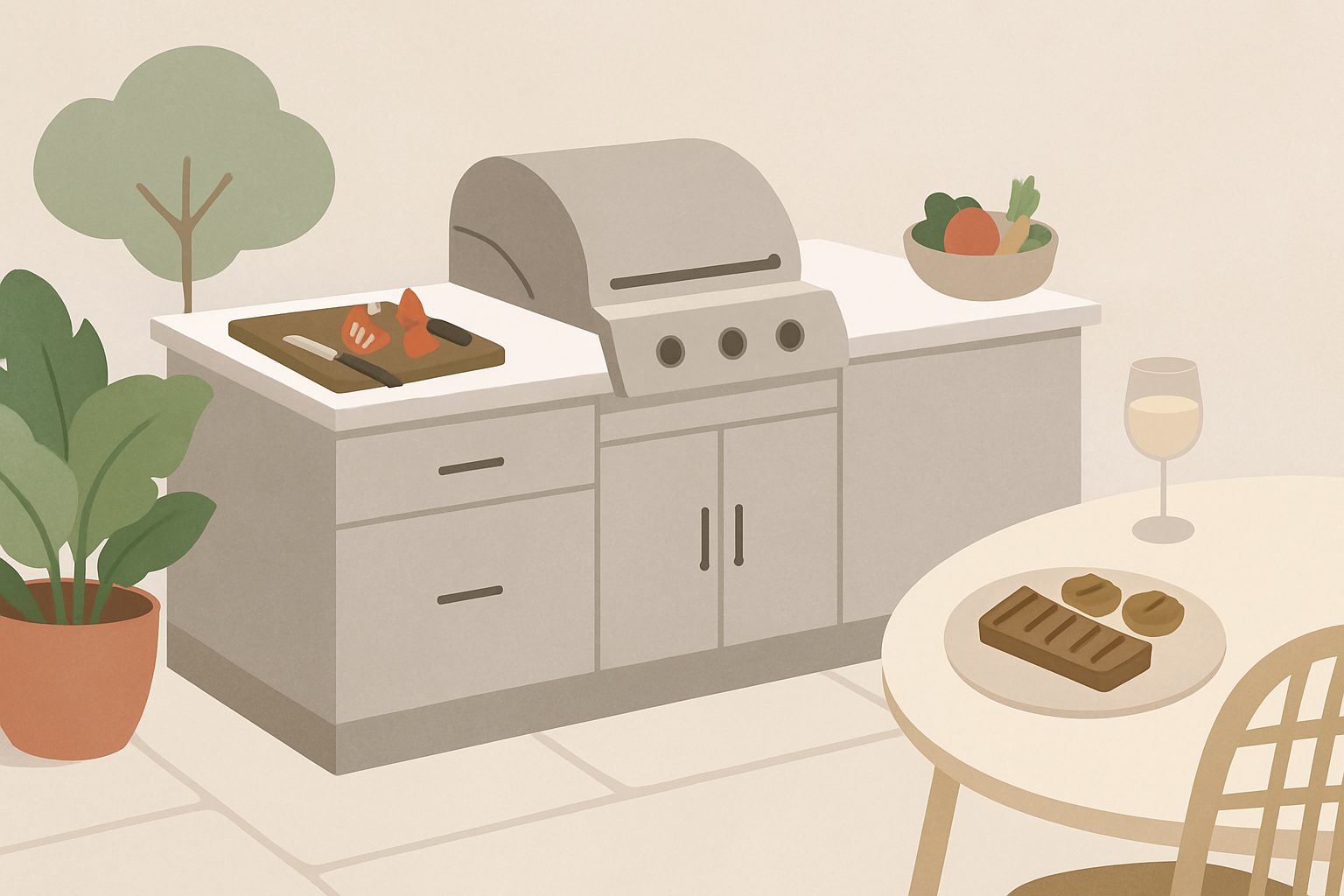
Outdoor Kitchen Island Gas Connection UK – Safety, Regulations & Setup Guide
Connecting a gas supply to an outdoor kitchen island isn't a simple DIY job in the UK. The regulations are strict, the stakes are high, and getting it wrong can void your insurance or worse. This guide covers what you actually need to know about Gas Safe certification, the LPG versus natural gas choice, hose specifications, and whether your installation will meet UK building standards.
Gas Safe Registration: The Legal Requirement
Any gas work in the UK must be carried out by someone registered with Gas Safe Register. This isn't optional—it's a legal requirement under the Building Regulations and the Gas Safety (Installation and Use) Regulations 1998. If you're fitting a gas hob, grill, or integrated cooking appliance to your outdoor island, the installer must be Gas Safe registered and must provide you with a commissioning certificate upon completion.
This registration matters because it proves the installer has undergone proper training and can work to safety standards. When you sell your property or make an insurance claim, you'll need to evidence that certificate. The fine for non-compliance isn't trivial, and your buildings insurance could deny claims if work wasn't certified.
Check the Gas Safe Register online before hiring anyone—search by name or company number. A registered engineer will have a physical card on them; ask to see it.
LPG vs Natural Gas: What's Available and How They Differ
Most UK residential outdoor kitchen islands run on LPG (liquefied petroleum gas) rather than mains natural gas, simply because your garden isn't connected to the gas network. LPG comes bottled (usually 7kg, 13kg, or 19kg cylinders) and sits in a cabinet, under the worktop, or in a standalone holder beside the island.
Natural gas is available if you live near a mains connection and it runs to your garden, but installation requires digging trenches and coordination with your supplier—expensive and often impractical for outdoor islands. Most people choose LPG for simplicity.
The key practical difference: LPG requires an external pressure regulator (usually 30mbar for domestic cooking), whereas natural gas uses a different regulator. Hoses, fittings, and appliances are sometimes dual-compatible but often not, so confirm your chosen fuel before ordering the island or hob.
LPG pressure regulators fail occasionally and need annual servicing or replacement every few years depending on the type. Natural gas regulators are similar. Budget for this maintenance.
Hose Specifications and Materials
Your gas supply hose is critical. In the UK, you must use hose certified to EN 1256 (LPG hose) or EN 12864 (natural gas hose). Garden centre hoses are often cheap rubber with compression fittings—these will not pass inspection and can leak or fail under pressure.
Proper hose is braided stainless steel (typically BS EN 1256-compliant), rated for outdoor use and UV resistance. It's more expensive than cheap alternatives—expect £30–£60 for a 2-3m run—but it won't perish in sunlight or crack when pinched.
The diameter matters too. Most domestic gas appliances (grills, hobs, side burners) run on 8mm or 10mm hose internally, with 1/4" or 3/8" BSP (British Standard Pipe) fittings at each end. Confirm what your island or appliance specifies; using the wrong size wastes pressure.
Hose runs should be kept as short and direct as possible to minimise pressure drop, secured with appropriate clips (not zip ties), and routed so they can't be accidentally damaged or pinched. Never bury hose underground without a protective conduit; the regulator and cylinder sit above ground.
Installation Considerations and Building Control
If you're building a bespoke outdoor kitchen island, check with your local Building Control before you start. In many cases, a modest fixed cooking appliance in a garden doesn't require approval, but integrated electrical work (for extraction fans, lights, or power sockets in wet areas) or permanent structures might. A quick pre-application conversation with your local authority prevents expensive surprises.
Your cylinder or regulator must be accessible for inspection, servicing, and bottle replacement. Don't box it in completely; a ventilated cabinet is fine, but it needs to be removable without tools.
If the island has an electrical element—lights, a refrigerator, or a ventilation hood—that work must also be carried out or certified by a qualified electrician. Outdoor electrics need to be on an RCD-protected circuit and meet IP ratings suitable for the wet environment. This is separate from the gas work but equally important.
Safety Checklist Before You Use It
Once installation is complete:
- Check for leaks using soapy water sprayed on fittings and hose. Bubbles mean gas is escaping.
- Ensure the cylinder is secured in an upright position; lying or tilted cylinders feed liquid instead of vapour, which damages appliances.
- Test all burners to confirm even heat and full flame. Weak or yellow flames suggest pressure issues.
- Keep the appliance clean; blocked burner holes affect performance and safety.
- Before extended winter storage, turn off the cylinder, let the system depressurize, and disconnect the hose.
When to Call a Professional
Don't attempt to modify or extend the gas supply yourself, even if you're confident with general DIY work. Hire a Gas Safe registered engineer for:
- Any new installation or modification to gas lines
- Hose replacement or relocation
- Pressure regulator issues or replacement
- Any suspected gas smell or leak
The cost of a site visit and minor repair (usually £80–£150) is negligible compared to the risk. If you smell gas, turn off the cylinder immediately, don't use naked flames or electrical switches, and call your supplier or the Gas Safe emergency line.
Outdoor kitchen islands are a genuine luxury when done properly. Knowing the regulations and specifications inside out means you can commission the work with confidence and enjoy it safely for years.
More options
- Modular Outdoor Kitchen Island Units (Amazon UK)
- Stainless Steel Outdoor Kitchen BBQ Island (Amazon UK)
- Outdoor Kitchen Island Weatherproof Cover (Amazon UK)
- Outdoor Rated Undercounter Fridge (Amazon UK)
- Outdoor Pizza Oven Insert for Kitchen Island (Amazon UK)