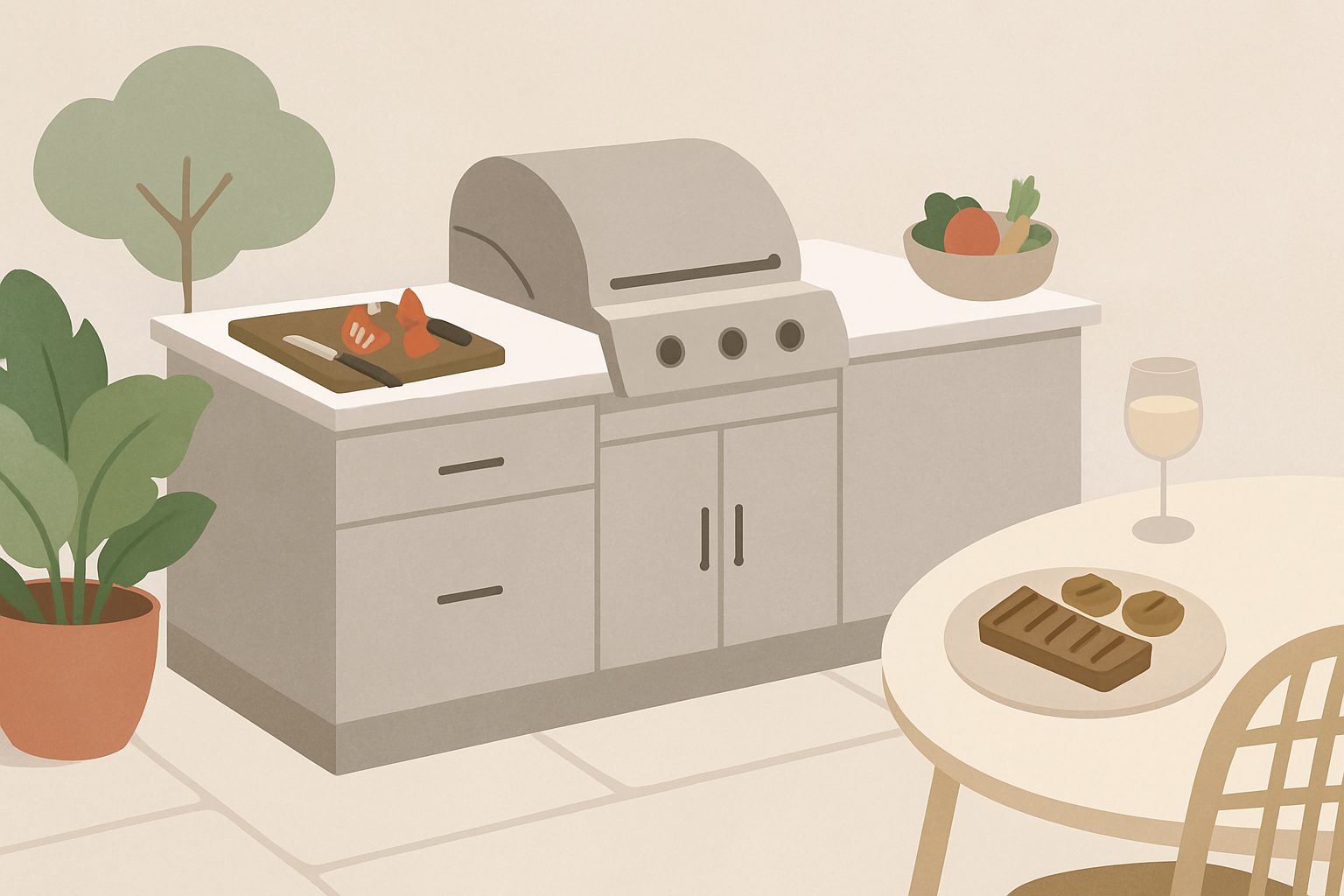
Stainless Steel Outdoor Kitchen Islands UK – Complete Buyer's Guide 2025
If you're planning an outdoor kitchen in the UK, choosing the right stainless steel island is one of your most important decisions. Unlike indoor kitchens where a standard steel worktop is fine, outdoor units face relentless weathering—salt spray on the coast, freeze-thaw cycles in winter, and persistent damp in our maritime climate. The steel grade you select determines whether your island looks pristine in five years or shows significant corrosion in two.
This guide cuts through the marketing noise and explains what actually matters when buying a stainless steel outdoor kitchen unit.
Why Stainless Steel Grade Matters More Than You Think
Not all stainless steel is equal. The two grades that appear in outdoor kitchen islands—304 and 316—sound like minor variations but deliver very different durability.
304-grade steel (the more common option) contains 18% chromium and 8% nickel. It's excellent for indoor kitchens and moderate outdoor use in sheltered positions. It resists general corrosion and mild salt exposure reasonably well. However, it develops pitting and crevice corrosion when exposed to chloride, particularly in coastal areas or where salt spray is common.
316-grade steel adds 2–3% molybdenum to the mix, which dramatically improves chloride resistance. This isn't marketing—the molybdenum creates a more protective oxide layer in saline environments. If you're within 5 miles of the coast or in an area with de-icing salts, 316-grade is essentially mandatory. Inland and away from salt sources, 304 will perform adequately, though 316 offers longer peace of mind.
The cost difference between 304 and 316 islands is typically 15–25%, money that most coastal users recoup by avoiding replacement or extensive refinishing within a decade.
Durability in UK Weather Conditions
British weather creates specific challenges. Our winters mean prolonged damp rather than hard freezes; our summers are often cool and wet; and coastal regions expose outdoor furniture to salt spray year-round.
Stainless steel doesn't rust like carbon steel, but it can corrode if the protective chromium oxide layer is compromised. This happens through:
- Chloride exposure: Sea salt, road salt, and salt in air
- Crevice corrosion: Where water pools in seams, joints, or under fixtures
- Galvanic corrosion: When stainless contacts dissimilar metals (common with poor-quality hinges or fasteners)
Quality outdoor islands minimise these risks through welded rather than riveted construction, stainless fasteners throughout (not plated steel), and good drainage design. Check that seams are fully welded and smooth; any rough welds trap moisture. Look for drain holes at the base and sloped surfaces to prevent standing water.
Finish matters too. A brushed or satin finish shows fingerprints less than polished steel and masks minor surface marks, which is more practical for heavy outdoor use. Polished steel looks stunning but requires more frequent cleaning to maintain appearance.
What to Check Before You Buy
Thickness: Outdoor islands should use 1.2–1.5mm gauge steel minimum. Anything thinner feels flimsy and dents easily; thicker steel is heavier but more durable and heat-resistant if you're installing built-in grills.
Fasteners and hinges: These corrode first. Ensure all fasteners are stainless (look for the marking—it should say A4-70 or similar), not zinc-plated. Hinges should be commercial-grade stainless, not cheap chromed brass.
Sealing and joints: Inspect welds under good light. They should be clean and continuous. Any gaps, rough surfaces, or visible corrosion in seams indicate poor quality. Doors and access panels should seal flush to prevent water ingress.
Legs and base: Weight distribution matters. Wide, stable legs are safer, especially on decking. Check that feet have adjusters for unlevel ground. Some cheaper units use hollow tube legs; solid or heavily braced construction is more stable long-term.
Warranty: Reputable manufacturers offer 2–5 years on structural components, though stainless guarantees against corrosion are usually limited. Read the fine print—many warranties exclude coastal use or require specific maintenance.
Practical Maintenance
Stainless steel islands aren't maintenance-free, but the right routine keeps them looking new.
Monthly, wash with mild soap and warm water, wiping along the grain if brushed finish. Dry thoroughly afterward. For mineral deposits from hard water, use white vinegar on a soft cloth.
Avoid acidic cleaners (like citrus-based degreasers) on brushed finishes—they can damage the protective oxide layer. Steel wool and abrasive scouring pads also scratch and should be avoided. If marks do appear, fine-grit sandpaper (120–220 grit) used very lightly can restore the finish on brushed steel.
In coastal areas, rinse with fresh water after storms or windy spells when salt spray is likely. This removes chloride before it settles. Once or twice yearly, apply a stainless steel conditioner to maintain appearance and add temporary water repellency.
Where to Find Quality Units
Amazon's outdoor kitchen range includes both budget and premium options; filtering by stainless grade and coastal/marine certification narrows results usefully. Prices range £400–£1,200 for mid-sized islands. John Lewis stocks several brands with reliable returns policies. Specialist outdoor kitchen retailers like Ooni dealers and garden furniture showrooms often stock higher-end units and can advise on coastal suitability. Local hospitality suppliers occasionally sell commercial-grade stainless islands at reasonable prices—these are overbuilt for domestic use but will outlast most garden equipment.
Always buy from sellers offering detailed product specifications, not just photos. You need to know the exact steel grade, thickness, and fastener materials before committing.
Final Thoughts
A stainless steel outdoor kitchen island is one of the better investments for a garden worth spending time in. Choose 316-grade if you're anywhere near the coast; confirm welded construction and all-stainless fasteners; and commit to basic seasonal care. A well-chosen unit will serve for 10+ years with minimal maintenance—significantly longer than painted steel or aluminium alternatives that corrode or oxidise under UK conditions.
More options
- Modular Outdoor Kitchen Island Units (Amazon UK)
- Stainless Steel Outdoor Kitchen BBQ Island (Amazon UK)
- Outdoor Kitchen Island Weatherproof Cover (Amazon UK)
- Outdoor Rated Undercounter Fridge (Amazon UK)
- Outdoor Pizza Oven Insert for Kitchen Island (Amazon UK)